
How to interpret condition when buying an older football shirt and which areas deserve the closest inspection before checkout.
Premium guide overview
Read condition more clearly
Condition can make the difference between a great buy and a disappointing one, so this guide frames what wear usually matters most.
Quick checklist
What this guide helps you evaluate
Use these checkpoints as a fast pre-read before going through the full article.
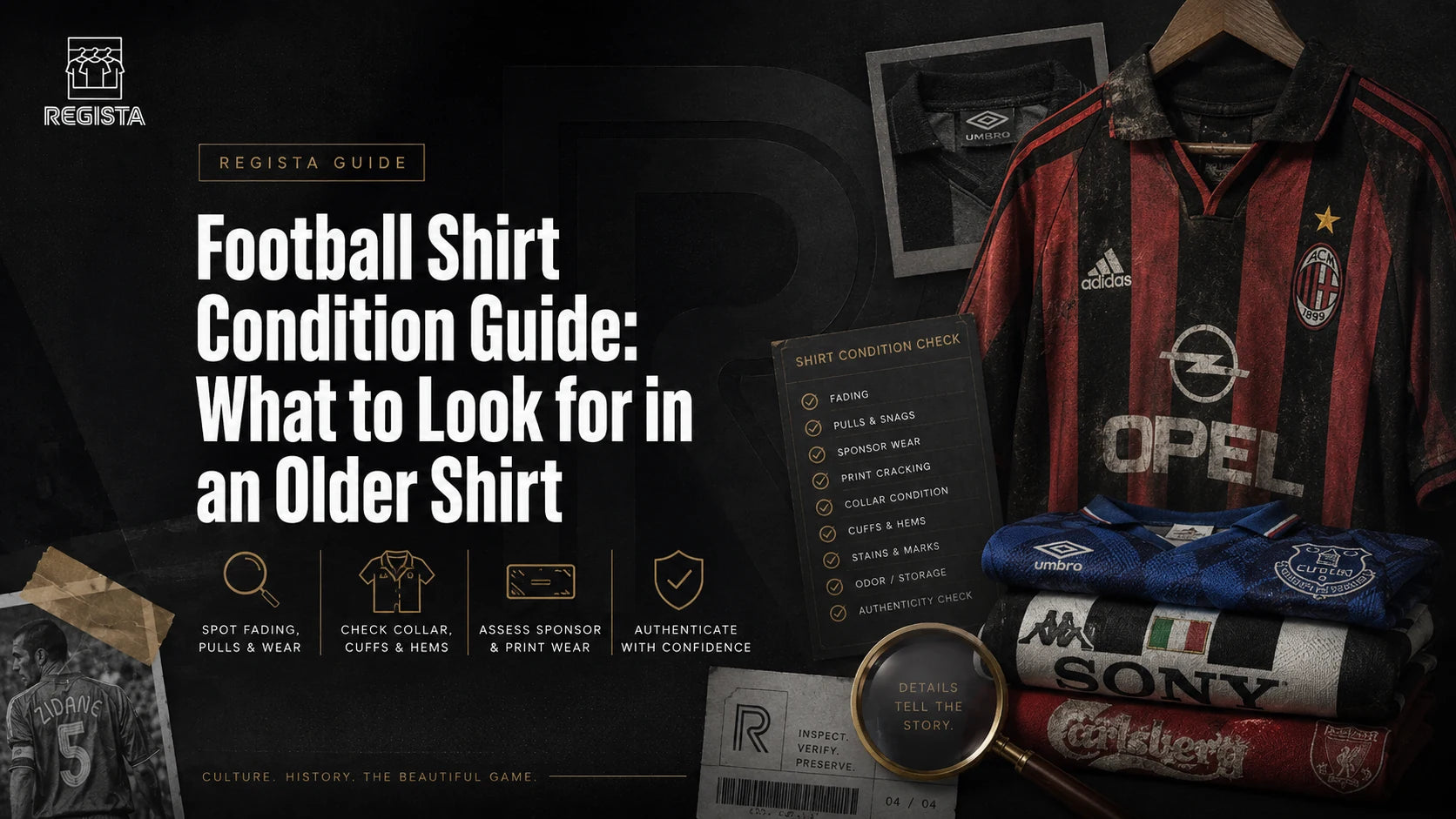
Scan for staining, fading and marks
Check sponsor and name set cracking
Inspect fabric for pulls or bobbling
Look at cuffs, collar and seams
Balance flaws against rarity and price
Condition is one of the biggest differences between buying a new retail shirt and buying an older football item. Age alone does not tell you the condition: two shirts from the same season can have been stored, worn and washed very differently.
Assess the exact item
Condition should be attached to the individual listing, not to the shirt design in general. Review the photos and description for the exact piece you are considering.
Fabric
Look for pulls, bobbling, small holes, thinning, discolouration and marks. Light signs of wear may be acceptable to one buyer and a deal-breaker to another, so decide what matters to you before comparing prices.
Sponsors and applied graphics
Older sponsor applications can crack, lift, fade or become tacky over time. Inspect their edges and surface. If the sponsor is a major reason you want the shirt, give this area extra attention.
Names, numbers and patches
Player printing and patches can age differently from the base garment. Look for cracking, peeling, missing sections or colour changes. Do not assume that a shirt described as being in strong overall condition means every applied detail is equally clean.
Badges and embroidery
Check for loose threads, lifting edges or visible damage. The construction method will vary, so focus on the condition of the actual badge rather than expecting every era to look the same.
Collars, cuffs and underarms
These areas often show wear first. Look for stretching, staining or fabric changes. They can be easy to miss in a single front-facing photograph.
How condition affects value
Condition is only one part of value. Era, design, player association, scarcity, size and demand can all matter. A heavily desired shirt with visible wear can still be collectible, while a very clean common shirt may be easier to replace.
Regista condition information
Regista shows condition information on the individual product listing. Use that label together with the product photographs and description. If a particular mark or detail matters to you, contact Regista with the product link before ordering.
See the FAQ for additional buying information.
Regista guide reviewed 29 August 2026. Product availability and individual item condition can change as stock sells.
Editorial comparison
Condition areas that deserve a closer look
Different parts of an older shirt age in different ways.
| Area | Typical issue | Why buyers care |
|---|---|---|
| Fabric | Pulls, bobbling, marks or fading | Affects overall presentation and wearability |
| Sponsor | Cracking, lifting or tackiness | Can be one of the most visible age points |
| Name & number | Peeling, cracking or missing sections | Often ages differently from the base shirt |
| Collar & cuffs | Stretching, staining or wear | Can reveal frequent use |
| Badge | Loose threads or lifting | Important visual and construction detail |
Age-related wear is not automatically a problem. The important part is knowing what the wear is, where it is and whether the price reflects it.
Condition is easier to accept when…
- Wear is shown honestly in photos
- The description identifies meaningful flaws
- The price reflects the condition
- You know whether you want a wearable or collector example
Look more closely when…
- The photos avoid known wear areas
- “Excellent” is used without item detail
- Sponsor or print condition is not shown
- The listing hides flaws behind distance or lighting
Questions buyers ask
FAQ
Short answers to the questions most relevant to this guide.
What is the most important condition area on an older football shirt?
It depends on what you value, but fabric, sponsor, printing, collar, cuffs and visible marks are all worth checking separately.
Can a worn vintage shirt still be collectible?
Yes. Scarcity, player association, design and demand can make a worn example collectible even when the condition is not perfect.
Should condition labels replace photos?
No. Use the condition label as a summary and the exact item photographs as the detailed evidence.
Regista tip
A smarter way to use this guide
A shirt can still be a strong buy even with honest age-related wear if the listing describes it clearly and the price reflects it.
Avoid this
Common mistake to avoid
Expecting every older shirt to feel like a brand-new retail item.
Next step
How to use this on Regista
Filter your shortlist by the level of wear you are comfortable with, then compare listings more carefully.
Use it to understand what matters most.
Check the exact photos, size and condition.
Make the decision with clearer expectations.
These Regista guides are designed to help with general buying, collecting, sizing and care decisions. For any order decision, use the exact product listing as the source of truth for the item’s photos, size, condition and availability.
Shop
Browse individually listed football shirts
Compare item-specific size, condition and availability across the current catalogue.
Browse all shirtsSupport
Use the guide, then verify the exact product
Need extra reassurance? Check the listing again, then review the FAQ before you order.