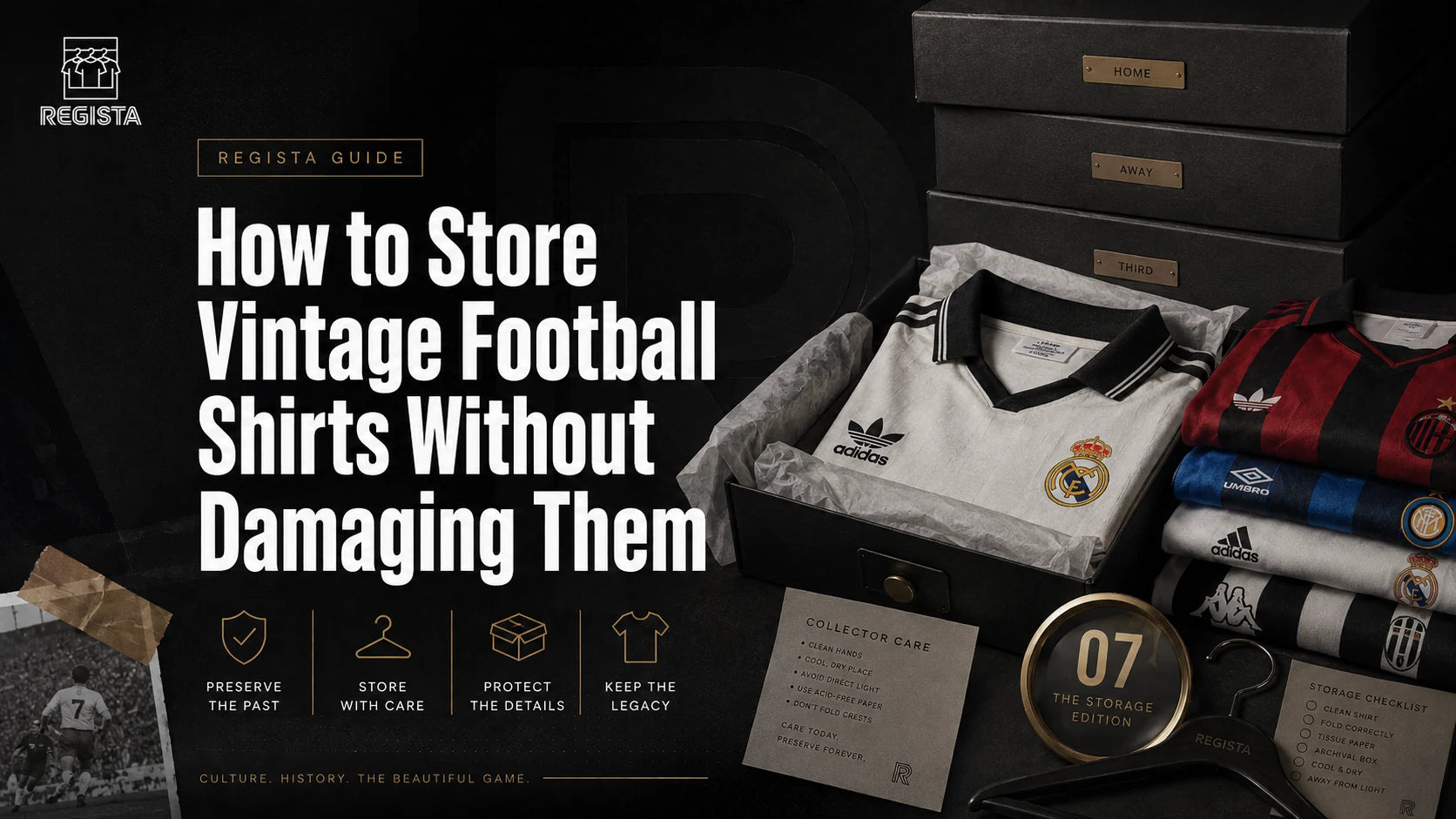

Practical storage principles for older football shirts, especially pieces with ageing sponsors, prints, patches or delicate fabric.
Premium guide overview
Protect shirts for longer
Storage affects longevity, so this guide is about reducing avoidable wear, print damage and fabric stress over time.
Quick checklist
What this guide helps you evaluate
Use these checkpoints as a fast pre-read before going through the full article.
Keep shirts in a cool and dry environment
Avoid harsh direct sunlight
Be careful with hanging methods and weight
Protect sponsor prints and embellishments from pressure
Review shirts occasionally instead of leaving them untouched for years
Good storage is less about creating a museum and more about avoiding the conditions that accelerate damage. Older football shirts often combine synthetic fabric with applied sponsors, names, numbers and patches that can age at different rates.
Keep shirts clean and fully dry
Do not put a damp or sweaty shirt into long-term storage. Moisture and residue can create staining, odour and material problems. Follow the garment's care information before storing it.
Avoid heat and strong direct sunlight
Long exposure to heat and UV light can affect colours and applied graphics. Store important pieces away from radiators, hot loft spaces and windows that receive strong direct sun.
Reduce pressure on sponsors and printing
If an older sponsor or player print is becoming fragile, avoid leaving it tightly folded against itself under heavy weight. Use a storage method that reduces unnecessary pressure and friction on delicate applied areas.
Folding or hanging?
There is no single method for every garment. Hanging can be convenient, but heavy garments or unsuitable hangers can place stress on shoulders. Folding can work well if you avoid sharp creases through fragile prints. Choose the method that best suits the material and construction of the item.
Give the collection space
Overpacking a drawer or box increases pressure and makes it harder to inspect shirts without rubbing them against each other. A little space also makes it easier to rotate folds occasionally if needed.
Document what you own
Keep simple photographs and notes of the shirt, size, season and condition. Documentation makes a collection easier to manage and helps you notice changes over time.
Inspect occasionally
Long-term storage should not mean forgetting the item completely. Periodically check delicate sponsors, printing and any areas that were already showing age.
Condition begins with the item you buy. When shopping, review the exact photographs and condition information on the individual Regista listing.
Regista guide reviewed 29 August 2026. Product availability and individual item condition can change as stock sells.
Editorial comparison
Storage choice comparison
The right method depends on the garment and how often you access it.
| Method | Useful when | Main caution |
|---|---|---|
| Flat folded | You want low fabric stress | Avoid hard folds across prints |
| Hanging | The garment structure supports it | Poor hangers can stretch shoulders |
| Archive box | Long-term collector storage | Environment still needs to be dry and stable |
| Display | You want the shirt visible | Light exposure can fade colours |
| Wardrobe shelf | Frequent access | Do not overcrowd or compress prints |
Good storage is not about hiding a shirt from the world. It is about reducing the avoidable stress that slowly damages it.
Better storage environment
- Cool and dry conditions
- Low direct sunlight
- Enough space around the garment
- Occasional inspection for changes
Storage risks
- Damp rooms or condensation
- Heavy pressure on sponsors or prints
- Thin hangers stretching shoulders
- Long-term direct sunlight
Questions buyers ask
FAQ
Short answers to the questions most relevant to this guide.
Is it better to hang or fold a vintage football shirt?
There is no universal answer. It depends on the shirt’s weight, print, fabric and how it is stored; the goal is to avoid unnecessary stretching or pressure.
Should I store vintage shirts in plastic bags?
Long-term storage needs thought about moisture and ventilation. Avoid creating a damp or unstable environment around the garment.
Can sunlight damage a football shirt?
Yes. Long-term direct light can contribute to fading and deterioration, especially when the shirt is displayed.
Regista tip
A smarter way to use this guide
Simple storage habits often prevent the type of damage that cannot be reversed later.
Avoid this
Common mistake to avoid
Stuffing shirts into overcrowded drawers or leaving them in damp areas.
Next step
How to use this on Regista
After buying, decide whether the shirt is for wear, display or collection storage and treat it accordingly.
Use it to understand what matters most.
Check the exact photos, size and condition.
Make the decision with clearer expectations.
These Regista guides are designed to help with general buying, collecting, sizing and care decisions. For any order decision, use the exact product listing as the source of truth for the item’s photos, size, condition and availability.
Shop
Browse individually listed football shirts
Compare item-specific size, condition and availability across the current catalogue.
Browse all shirtsSupport
Use the guide, then verify the exact product
Need extra reassurance? Check the listing again, then review the FAQ before you order.